Biographies of Jamaican Personalities (I-N)
|
|
- MANLEY, Michael
- MANLEY, Norman Washington
- MARLEY, Robert Nesta
- MARRIOTT, Alvin
- MARSON, Una Maud

- McCALLA, Zaila
- McKENLEY, Herb
- MORRIS, Mervyn
- MUSGRAVE, Sir Anthony
- NETTLEFORD, Rex

|
 |
Kenneth Everard Niven Ingram (1921-2007)
A Librarian and Bibliographer, K.E. Ingram - as he is known - has made an outstanding contribution to Librarianship and Historical Scholarship in Jamaica and the Caribbean.
Born in St. Ann in 1921, Kenneth Ingram was educated at Jamaica College between the years 1932 and 1939. In 1941, he joined the staff of the Institute of Jamaica, thereby beginning a long-standing connection with the Institution where he served as a founding member of the Board of Management of the National Library of Jamaica. He worked in the West India Reference Library for three years before going to the United Kingdom to study for his degree and to qualify as a Librarian. He was one of the first Jamaican to qualify as a professional Librarian and when he returned home in 1947 he was appointed supervisor of the West India Reference Library.
He held this position until 1950 when he joined the staff of the then University College of the West Indies. He spent the next 30 years at the University Library before retiring in 1981 as University Librarian, a position he had held for ten years.
A founding member of the Jamaica Library Association he served as its first Secretary from 1950 to 1953. He was very active in the professional association and served in various other offices including that of President in 1956 and 1972. he was also involved in regional library activities which culminated in his election in 1976 as President of the Association of Caribbean Universities, research and Institutional Libraries (ACURIL).
As outstanding as was his career as Librarian, it is as a bibliographer that K.E. Ingram has distinguished himself and has a permanent record of his accomplishments. He has had a life-long quest to identify, record and whenever possible obtain for Jamaica copies of primary source materials on our history held by repositories overseas. He has compiled a number of guides which are indispensable tools to researchers and other persons interested in the history of the region. Through his painstaking research in countless libraries and archives chiefly in North America and the United Kingdom, hirtherto unknown or inaccessible materials have come to light.
Scholarly, witty and urbane, K.E. Ingram is also a poet and his poems have appeared in Focus, Caribbean Quarterly and other publications. Had he continued to write and published poetry he might have become one of the major poets of the region. Had this happened, the field of Librarianship and Historical Scholarship would have lost a major figure, who through his career and accomplishments has established a high standard of excellence that is difficult to surpass.
Awards
He was awarded:
- a Gold Musgrave Medal for his distinguished eminence in the field of Librarianship and Historical Scholarship.
- Officer of the Order of Distinction by the Government of Jamaica
Major Publications
- Jamaica (vol. 45 in the World of Bibliography series). Clio Press, 1984.
- Sources of west Indian Studies: a Supplementary list with particular reference manuscript sources. Inter-Documentation Company, 1983.
- Manuscripts relating to Commonwealth Caribbean Countries in United States and Canadian repositories. Caribbean Universities Press, 1975.
- Sources of Jamaica History 1838 - 1955: a bibliography survey with particular reference to manuscript sources. Inter-Documentation Company, 1976 (2 Vols.).
- Libraries and the challenge of change: papers of the International Library Conference held in Kingston, Jamaica 24 -29 April, 1972. edited by K.E. Ingram and Albertina Jefferson. Mansell 1975.
- The Q.C. and the Middleman: including a reprint of the Report of the cases Ingram vs Lowry. Edinburgh: Pentland Press, 1997.
Back to top
|
 |
Thomas Phillip Lecky , Ph.D., O. B. E, O. M. (1904 - 1994)
Dr. Thomas Phillip (T.P.) Lecky, pioneer Jamaican Scientist, was born on December 31, 1904. He was the twelfth of thirteen children and grew up in Swift River, Portland. Lecky was introduced to agriculture at an early age, as his father was a farmer and as a young man he took an interest in livestock.
Lecky started his education at the Swift River Primary School. He later studied agriculture at the Government Farm School (later Jamaica School of Agriculture) where he received a diploma. He graduated from the MacDonald College at McGill University, Canada in 1930 with a Diploma in Agriculture.
Lecky continued his studies at the Toronto University reading for his Bachelor of Science Degree for which he was awarded an honours degree. Several years later, Lecky read for his Ph.D. at Edinburgh University, Scotland. Lecky’s research throughout his educational and professional careers focused on cattle. In 1951 Lecky’s extensive research resulted in the first breed of indigenous Jamaican cattle, the Jamaican Hope, which he used as the basis for his Ph.D. thesis. Further research resulted in the Jamaican Red, Jamaican Brahman and Jamaican Black cattle breeds. Lecky also contributed to the field of agriculture in Jamaica through the numerous professional posts he held throughout his career. He served as:
- Bench Chemist
- Foreman at a Farm School
- Farm Supervisor
- Farmer
- Teacher at Holmwood Technical High School
- Livestock Inspector
- Livestock Field Officer
- Junior Agricultural Officer
- Agricultural Officer
- Livestock Officer (Senior and Chief)
- Director of Animal Husbandry
- Director of Livestock Research
- Consultant
Lecky also has several publications to his credit. He published an autobiography in 1994, titled Cattle and I. He also wrote several papers that have been delivered at international conferences. Lecky was also the recipient of several honors and awards, these being:
-
1959 - Officer of the Order of the British Empire (O.B.E) “for meritorious and devoted service to agriculture”
-
1970 - First recipient of the Norman Manley Award for Excellence
-
1971 - Doctor of Science (Honoris causa), University of the West Indies
-
1978 - Order of Merit, Government of Jamaica “for work of national and international importance”
-
1987 - The Mutual Security Foundation Outstanding Achievement Award
-
1989 - Fellow of the Jamaican Society for Agricultural Sciences
-
1992 - Induction into the Professional Societies Association in Jamaica
Dr. Lecky still remains a role model for many Jamaican scientists. He died in 1994 at the age of 90.
Source
B/N (Biographical Notes) file - National Library of Jamaica– Lecky, Thomas Phillip (Dr.)
Lecky, T. P. Cattle and I. Kingston: Ian Randle, 1996.
Back to top
|
 |
Mallica 'Kapo' Reynolds (1911-1989)
Mallica Reynolds was born on February 10, 1911 in the district of Byndloss, St. Catherine. His career as an artist began in the 1930s. ‘Kapo’ as he was more popularly called was a self-taught artist. He was more popularly known for his painting but he was also a sculptor. Kapo along with the late Sidney McLaren and Brother Everald Brown, led the group of artists referred to as the ‘Intuitives’. This group of artists tried to capture on canvas or in wood, the spirit or living forces behind objects and situations.
Kapo’s works have been exhibited widely both at home and abroad. He has held exhibitions in New York in 1953, 1969 and 1982; Los Angeles 1964 and 1968; and in Washington D.C. in 1972. His works form a part of the permanent collection of the National Gallery.
In 1981, Kapo’s painting “Shining Spring” was chosen as a wedding gift to Prince Charles and Lady Diana Spencer from the Government and people of Jamaica. “Shining Spring” was selected by the Institute of Jamaica, along with the Office of the Prime Minister because it was felt to be representative of true Jamaican art. Besides being an artist, Kapo was a deeply religious man. He was an ordained Bishop of a revivalist sect. He was patriarch and founder of the St. Michael’s Revival Tabernacle. Some of his earlier works carry religious themes. He was the recipient of many awards in Jamaica. These are as follows:
- 1966 - Gold Medal from Emperor Haile Selassie during his visit to Jamaica that year;
- 1969 - Silver Musgrave Medal from the Institute of Jamaica
- 1977 - Awarded the Order of Distinction by the Government of Jamaica
- 1985 - The Norman Manley Award for Excellence in the Fine Arts
- 1986 - Gold Musgrave Medal from the Institute of Jamaica
Kapo was married twice. He died on February 24, 1989 leaving widow Sheila and children.
Back to top
|
| |
Joseph Bartholomew Kidd (1808 - 1889)
J. B. Kidd was born in Edinburgh, Scotland in 1808. A landscape painter, he was one of the original associates of the Scottish Academy of Art, where he was a regular exhibitor. "Cocoa nut walk on the Coast"
Between 1835 and 1843, Kidd visited Jamaica three times, where his older brother, Thomas Patrick Kidd was in business as a general merchant in Falmouth. During his visits he became enthralled with the Jamaican landscape and captured in pencil and paint Jamaica's "superb and picturesque" scenery as he called it. He is also known to have done some portraits including sketches of slaves.
He then held a show of his paintings in Falmouth, which was said to be the first display of its kind ever seen in the colony. It was staged at his brother's home and advertisements inviting the public were inserted in the Falmouth Post. It was very favourably reviewed in The Jamaican Standard, where the reviewer remarked on the rare occurrence of an artist excelling in both portraiture and landscape painting.
"Savanah La Mar"
His Scottish and Jamaican landscapes were evidently much admired by the local gentry and he was often commissioned to paint scenes and portraits for them.
Kidd's paintings found ready purchasers, and with the success of his Jamaican works, he embarked on the most ambitious art publishing project originating in Jamaica at that time.
During 1836 he wandered around the island making sketches for his projected set of lithographed "West Indian Scenery. Illustrations of Jamaica, in a series of views comprising the Principal Towns, Public Buildings, Estates and most picturesque scenery of the Island... ".
"The Date Tree"
By September 1837, Kidd published Part I of his illustrations of Jamaica. The illustrations however, were unaccompanied by any descriptive text or notes.
The overwhelming success of the five plates in this series, led to the translation over the next four years of a total of fifty drawings and paintings done in Jamaica in lithographs.
The subjects of the series are varied, giving us a comprehensive view of the Jamaican environment in the last days of the pre-emancipation era. From individual studies of plants and trees to vast vistas of townscapes and estates, from much admired "beauty spots" to the unusual views of Kingston "from the Commercial Rooms", we have been bequeathed a visual essay of Jamaica's extraordinary beauty.
J. B. Kidd died in Greenwich, England in 1889.
This is a list of some of the lithographs done by J. B. Kidd in his "West Indian Scenery. Illustrations of Jamaica...":
-
"The Date Tree. Sugar Works in the Distance"
-
"The Parade and Upper part of Kingston from the Church. Looking towards the Port Royal Mountains"
-
"View of the Hope River. Near Dunsinane"
-
"Sketch of Bamboos and Cotton Tree"
-
"Cocoa nut walk on the coast near Runaway Bay"
-
"Mountain Cottage scene"
-
"City of Kingston from the Commercial Rooms. Looking towards the South"
-
"Lethe Estate on the Great River, St. James and Hanover"
-
"Savanah La Mar"
Back to top
|
 |
William Knibb (1803-1845)
William Knibb was the son of Thomas and Mary Knibb, of Kettering Northamtonshire. His father was a tradesman in that town, and not a professor of religion. His mother, whose maiden name was Dexter, was a member of the independent church in Kettering.
Knibb was the fifth of eight children, and a twin whose other half was a sister. He was born on the 6th or 7th of September 1803. [He is described as] "... not remarkable for application, but he was quick and clever at his lessons".
On the 5th of October 1824 William Knibb was united in marriage to Mary Watkins. One month later 5th November they both set sail on board the Ocean for Jamaica West Indies. The Ocean arrived in sight to Jamaica early in the morning of Saturday, the 12th of February. The passengers of the Ocean left for Kingston.
Knibb was sent specifically to take charge of a Baptist School in Kingston, which his deceased brother had charge of. His services as a preacher was employed early after he arrived in Jamaica. Due to the deterioration of his wife's health in 1825 Knibb moved to Port Royal, cooler climate, where he re-opened the place of worship his brother had presided over. Knibb also ministered in Kingston and was instrumental in bringing the Baptist Churches, in Kingston, together to form an association in 1826. He was chosen secretary of the Jamaica Baptist Association.
It is claimed that Knibb's greatness began with the 1831 insurrection, instigated by a native Baptist leader Samuel Sharpe. Although he knew nothing of the planned rebellion until about two days before, he was, arrested and many false witnesses brought before the court to give evidence against him. He however won the case, but was harassed on all sides by the authorities because of his anti-slavery stance.
Knibb succumbed to the deadly Yellow Fever approximately 1:00 a.m. Saturday November 15, 1845 at the age of 42. He was ill for only one short week. His wife and two daughters survived him.
Back to top
|
 |
Easton Lee (1931 - )
Easton Lee was born in Wait-a-Bit, Trelawny, February 1931. He was born to a Chinese father, Henry and a Jamaican mother, Ercie, of mixed racial heritage. He spent his early years in several villages and towns where his parents operated a grocery shop. Lee is an author, dramatist, actor, theatre director, photographer and media personality. He is deeply involved in Jamaica's artistic and cultural life.
Easton Lee's formative years were spent in Siloah, St. Elizabeth in the middle of the sugar and rum producing areas of Appleton and Raheen estates. He was educated at Siloah Primary, Duncans Primary and Windsor High School. At the tertiary level, Mr. Lee attended the Jamaica School of Commerce, Pasadena Playhouse in California, the BBC London and the Civil Service Senior Staff College.
From his earliest years Lee was attracted to the theatre and after high school he joined the Caribbean Thespians Dramatic Society, then the leading group of its kind in Jamaica, and soon established himself as a major acting talent. This interest was broadened and enhanced when he went to work with the Jamaica Social Welfare Commission, now the Social Development Commission, a job which took him to every corner of the country.
His professional career however, has been spent chiefly in the field of Communication where he has maintained a high standard of excellence as a radio announcer at the then Jamaica Broadcasting Commission; or television announcer; director of audio-visual programming at the Jamaica Information Service, or as a public relations consultant.
It is in the field of drama however, that Easton Lee has made his greatest contribution. He has done this not only as a Drama Officer with the Social Welfare Commission but also as a playwright and director. "The Rope and the Cross" his best known play, has been produced several times at home and abroad and has been published.
Lee's interest is also channelled in religious plays, which no doubt comes from his own deep Christian beliefs. He has several religious plays to his credit including "Once in a Manger", "On the Third Day", and "They that Mourn". His writings also include poems, short stories and others such as "Tarshan Lace and Velvet", "My Dear Priscilla" and "Man to Man".
Mr. Lee has entered the Christian ministry with the Anglican Church and now serves as Priest at the St. Margaret's Church in Liguanea.
Awards
- Silver Musgrave Medal (Institute of Jamaica) for Contribution in the Field of Culture - 1988
- Jamaica Press Association Award for Radio Production - 1983
- Jamaica Press Association Award for TV Production - 1970
Back to top
|
| |
George Lisle, [Liele] (1750-1826)
George Lisle was the founder of Jamaica's first Negro Baptist Church. He was also the first ordained black Baptist minister in America and also in Jamaica. Born in about 1750 in Savannah, Georgia in United States, Lisle grew up in to the southern United States system of slavery and was converted to the Baptist faith in 1773. The Baptists and Methodists offered plantation negroes a more free and evangelical type of Christianity and Lisle felt that he had found his calling. Lisle was active in the ministry and organized the first black church in America in Augusta, South Carolina in 1773. Two years later, Lisle became licensed as a local preacher and began ministering in his church and on different plantations. Lisle was further encouraged in his ministry by his master, Mr. Henry Sharpe, who freed him in order to continue his ministry.
At the end of the American Civil War, Sharpe's children attempted to reinstate Lisle into slavery and he was forced to leave the United States. Lisle came to Jamaica in 1782 as an indentured worker. He was financially indebted to a British colonel called Kirkland, who had loaned him $700 for his and his family's passage to the island. Upon the Colonel's recommendation, Lisle was employed by the Governor of Jamaica for two years. Once his debt had been repaid to Colonel Kirkland and he had secured his free papers, Lisle began his religious work. He is considered to be the pioneer of Baptist witness in Jamaica.
Lisle's ministry in Jamaica started in Kingston in 1784, preaching in private homes and to small congregations. Lisle preached the gospel to his followers and his message immediately attracted a slave following. In 1791, Lisle and his congregation were able to purchase a 3 acre lot in East Kingston. By January 12, 1793, Lisle had successfully completed the building of the Kingston church. This was the first church of its kind in Jamaica; it was called the Windward Road Chapel and was located on the corner of Victoria Avenue and Elletson Road.
Lisle continued to win converts and by 1814 Baptist churches had been formed in Kingston, St. Catherine, St. Thomas, St. Mary and St. James. At this time membership was estimated to be about 8,000.For his ministry and work in Savannah and Jamaica, Lisle went unpaid. He supported his wife and four children by providing wagon transportation. In addition to preaching the gospel, Lisle was also involved with the education of the slave population. He founded schools for negroes in conjunction with his churches, which was a new concept in Jamaica. In 1822, Lisle paid a visit to England, he died a four years later in 1826.He rests in an unmarked grave somewhere in Kingston, Jamaica.
In 1966, a Christian Education Building was built by the East Queen Street Baptist Church, it was appropriately named the George Lisle Education Centre.
Back to top
|
| |
Robert Love (1839-1914)
Joseph Robert Love was born in the Bahamas on the 2nd of October, 1839. He began his career first as a teacher and then went to Florida in the United States where he took orders in the Episcopalian Church. He also studied medicine at the University of Buffalo and gained an M.D. degree. Love was a great admirer of Toussaint L'Ouverture, Haiti's first patriot and he spent 10 years in Haiti (the first black republic) and was appointed to a high executive post in the Medical Department. There, he continued as an Anglican Clergyman and became a Rector of a church in Port au Prince.
In 1889, Love came to Jamaica where he started the influential newspaper the "Jamaica Advocate". Love soon made a name for himself as a fearless journalist. He was deeply concerned with the social conditions black people in Jamaica. Using his paper, he tackled serious questions such as Negro education from the black man's point of view. He believed that young girls, as well as young boys should be educated up to the secondary level. One of his main themes was that a people cannot rise above the standards of its womanhood. The Advocate encouraged black people to assert their equality, educate themselves and develop self esteem and pride in their African heritage.
In 1906, Love campaigned for the seat of St. Andrew in the general elections and won. He was also chairman of the St. Andrew Parochial Board, a member of the Kingston General Commissions and a Wolmer's Trustee. He was also a Justice of the Peace for Kingston. Love did not think factors such as skin colour or status should be important when selecting a representative. It was his philosophy that the blackman should not consider himself inferior to the white man in any way at all. He is charged with having helped change the attitudes of white Jamaicans towards those of colour.
Love published two works, "Romanism is not Christianity" in 1892 and in 1897 "St. Peter's true position in the church, clearly traced in the Bible". He became ill in 1906 and was forced to end his short but active political career in 1910. Robert Love died on 21, November 1914 and is buried in the Parish Church yard at Half Way Tree. Robert Love is also noted to have had a strong influence on the thinking and work of Marcus Garvey.
Back to top
|
 |
Claude McKay (1889 - 1948)
Claude McKay, renowned author of several novels and anthologies was born in Jamaicaon September 15, 1889 . 1907 could be considered a significant year in the life of this great contributor to Caribbean literature. In that year he took his first job as an apprentice wheelwright, but more importantly, he met his first significant patron, Walter Jekyl.
At age 22 McKay joined the Constabulary Force inSpanishTownand a year later he published the “Jamaica Constab Ballads and Songs of Jamaica”. Later that year McKay migrated to the United Stateswhere he attended KansasStateUniversity . He then moved to New Yorkwhere he married Eulalie Imelda Edwards. The marriage lasted only six months.
Three years after his marriage ended he met his second significant patron, Frank Harris, editor of “Pearson’s” magazine. He then began publishing poems under the pseudonym “Eli Edwards” and in 1919 he published one of his strongest poems “If we must die” in Max Eastman’s “The Liberator”.
On a sojourn to Londonin the same year, the writer was introduced to the works of Karl Marx, thus his entry into Marxism. During his year’s stay in Londonhe worked for Sylvia Pankhurst’s Marxist periodical “Workers Dreadnought” and published “Spring in New Hampshire ”. In 1921 he returned to New Yorkfor a year during which time he became Associate Editor of “The Liberator”, and published two essays “How Black Sees Green and Red” and “He Who Gets Slapped”. In that period he also published the book “Harlem Shadows”. McKay resigned in June 1922 and made a pilgrimage to Russiato the enthusiastic welcome of Soviet bureaucracy and ordinary Russian people.
For a decade (1923-33) he was an expatriate to Europe and North Africa and in 1934 returned to the United Statesto spend several months in welfare camps. At age 49 he met Ellen Tarry, a Roman Catholic writer whose work inspired him to become Catholic shortly after he suffered a stroke.
In 1948 after living a full and very active life Claude McKay died peacefully at age 59 in Chicagoand was laid to rest in New York. Claude McKay has left an indelible mark on the literature of the region and his works are well-known and well-loved. These are some of his more famous poems:
-
Flame Heart
-
North and South
-
If We Must Die
-
Spanish Needle
|
 |
Edna Manley (1900 - 1987)
Edna Manley was born in Yorkshire, England in 1900 to a Jamaican mother and an English father and died February 2, 1987. She studied at various art schools in England including St, Michael's School of Art, London and privately with Maurice Harding, the animal sculptor. She married Norman Manley in 1921 and in 1922 moved to Jamaica with him. Art as it existed in Jamaica then could not have interested Edna. Sculpture was almost non-existent and painting was limited to a conservative watercolour landscape tradition, practiced essentially by amateurs. Yet, her own work changed dramatically after her arrival in Jamaica. There was a tremendous leap from the 'romantic realist' studies done up to the time of her departure from England to her first Jamaica work, the Beadseller. Shortly after, the Beadseller was to have a male counterpart, the Listener, after which Edna went to England in 1923 with her two plasters. The visit proved fruitful. She had the plasters cast into bronze and she was accepted into the Society of Women's Artists and had Beadseller displayed in their 1924 Exhibition.
Back in Jamaica in early 1924, she quickly set to work with new carving tools and produced Wisdom and then the Ape. At that time, too, she began to model realistic portraits in clay first of Norman and the two-year-old Douglas and then of a friend, Esther Chapman. Then, testing the possibilities of her new medium, she did a head of another friend, Leslie Clerk in wood.
The artist's various submissions to the exhibitions of the Society of Women Artists began to be noticed and in 1927 two French Journals - Les Artistes D'Aujourd "Hui and La Revue Moderne- singled out her work for praise. In England the interest in her work began to grow and in 1929, Edna returned there with a group of recently completed sculpture including Eve, the Torso of Woman, Boy with Reed and the Ape to exhibit in the Goupil Summer Exhibition.
In London on her 1929 visit, she discovered a new medium. She wrote to Norman, "I'm going eventually to carve stone". This was the preferred medium of the direct carvers whom she would have been observing at that time, and on her return to Jamaica later that year she began to carve in imported materials - Hopeton-wood stone, Caen-stone, Portland stone and Sandstone.
Throughout her career the artist passed through a series of phases, each representing Edna' stages in the development of her life and that of Jamaica:
-
Negro Aroused (1935 - 1940): This represented a search for a new order, a vision of a people being awakened to a new consciousness. Chief among her works at this time were Mountain Girl, Negro Aroused, The Prophet, Pocomania
-
The Dying God Series (1941 - 1948): Works including Before Thought, the Forerunner, Before Truth, Into the Mist. These are at one and the same time her most private yet universal works. In them are elements of a personal symbolism based on her own intimate relationships with her husband and family.
-
The Public Year and Public Commissions (1949 - 1969): At this time there is intense pressure on family and political life. Works at this time are isolated pieces, usually commissions. these include The Hills of Papine, The Mountains and all the All Saints Crucifix.
-
A Period of Mourning (1969-1974): This is the period of illness and death of Norman Manley. She does Angel, the Grief of Mary, Journey among others.
Mrs. Manley has played a major pioneering role in the history of 20th century Jamaican art. Her works are in private collections, galleries and public buildings worldwide. Since 1924 she exhibited in many one woman and group exhibitions mainly in London, the United States, the Caribbean and in Jamaica. In 1929 she was awarded the Institute of Jamaica's Silver Musgrave Medal. In 1943 she became the first recipient of the gold Musgrave Medal for her outstanding contribution and leadership in the arts in Jamaica.
Edna was co-founder of the Jamaica School of Art in 1950.She stopped carving in wood in 1974 with 'Journey' and all her subsequent works were carved in clay and cast. Later in 1977 she received the Honorary Degree of Doctor of Letters from the University of West Indies, Kingston. In 1980 at the National Gallery Retrospective Exhibition "Edna Manley the Seventies", she was awarded the Order of Merit.
Back to top
|
 |
The Rt. Hon. Michael Manley (1924 - 1997)
The life of this charismatic Jamaican leader began on December 10, 1924 in Kingston, Jamaica. Born to National Hero Norman Washington Manley and his wife, Edna Manley, Michael had one other sibling, his brother Douglas.
Young Manley started his education at the St. Andrew Kindergarten School in Kingston and later went on to the Munro andDickensonCollege. In September 1943, Manley left Jamaicato study at McGillUniversityin Canada but two weeks later volunteered to join the Royal Canadian Air Force. After his service in the Air Force Manley returned to Jamaica and had his first introduction to journalism as a sub-editor with the Public Opinion newspaper.
That same year Manley left Jamaica, this time to study at the London School of Economics in the United Kingdom . He completed his bachelor and postgraduate degrees while in England and continued his journalistic work with the British Broadcasting Corporation (BBC). In 1946 he married for the first time to Jacqueline Kamellardski. He later married four other times to Thelma Verity, Barbara Lewars, Beverley Anderson and Glynn Ewart.
It was during his student years in London that Manley became actively involved in politics, having started as a student organizer and founding member of the West Indies Students’ Union. In 1952 Manley returned to Jamaicaas Associate Editor of the Public Opinion, where he had worked before. It was at this time that he was formally introduced to the local political sphere when he was elected to the National Executive Council of the People’s National Party (PNP), which was founded by his father.
In 1952 the National Workers’ Union (NWU), an affiliate of the PNP, was formed and Mr. Manley began to handle union negotiations. He increasingly became involved in trade union and political activity while he continued his work with the Public Opinion, until August 1953 when he accepted the post of Sugar Supervisor for the NWU. In two years he was made Island Supervisor and First Vice-President of the Union . Among the most often retold events in Michael Manley’s career, as a trade unionist was the 97-day strike, which he led at the Jamaica Broadcasting Corporation in 1964. It was during that strike that the workers dubbed him “Joshua”, a nickname that many PNP supporters still fondly use.
In 1970, Michael Manley took over the leadership of the PNP when he was elected to that position, following his father’s resignation. In 1972 after reorganizing the PNP and embarking on an election campaign marked by the slogan, “Better Must Come”, Manley led the PNP to victory at the polls. He was sworn in as Prime Minister on March 2, 1972 . In the middle of his first four-year term, Mr. Manley’s Government declared that its ideological platform would become Democratic Socialism. This political shift led to the introduction of such social and economic reforms as the Minimum Wage Law, compulsory recognition of labour unions, maternity leave for women, the Children’s Act (Bastard Act) which granted equal status to children born to unwed as well as married parents. Free secondary education was also introduced. The Jamaica Movement for the Advancement of Literacy (JAMAL) and the Basic School Development Programmes were other initiatives of the new socialist Government.
Manley’s Government also introduced the Bauxite Levy in 1974 that exacted 7.5 percent of the earnings from bauxite sales. In addition, Government moved to acquire majority ownership of the local assets in the alumina industry.
On December 20, 1976 the Manley-led PNP again won a General Election, this time by a landslide 47 to 13 seat victory over the JLP. But by the end of the second term in office the Manley administration’s Democratic Socialist ideology led to alienation of the western giant, the United Statesand to the disenchantment of the electorate. The result was an equally telling landslide victory by the JLP in 1980 that put Michael Manley again in the seat of the Parliament Leader of the Opposition. Between 1980 and 1989 the JLP governed the country. However, it was only between 1980 and 1983 that the PNP was officially the Opposition Party. This came about as a result of the so-called “Snap Elections” of December 1983 which the Manley-led PNP refused to contest on the grounds that the Government had promised electoral reform before any election was called. Between 1983 and 1989 there was no constitutional opposition. However, Mr. Manley was viewed as the de facto Opposition Leader.
In 1985 the nation was made aware of the varied health problems which were to eventually lead to Mr. Manley’s retirement from active politics in 1992. He underwent surgery for diverticulitis, a benign thyroid growth, colon removal, prostrate gland cancer and blood clots in his leg, along with bouts of influenza and pneumonia. His recurring ill health put questions in the mind of the public about Mr. Manley’s future as President of the PNP. However, his influence remained strong and starting with the Local Government election of 1986 in which the PNP won in 12 of the 13 Councils, the Party continued to gain the support of the electorate.
The 1989 General Elections saw the return of the PNP to Government and Manley as Prime Minister. Prior to his re-election, Mr. Manley publicly declared that he had made errors during his previous administration and he took a more moderate ideological line. The new Manley administration was decidedly capitalist in its outlook as reflected in the Prime Minister’s speech to the 52nd Annual Conference of the PNP in 1990. He said the task of Government was to release the “spirit of initiative” and the “sense of energy and entrepreneurship” in every Jamaican. This ushered the move to the liberalization of the economy. After three years in office Mr. Manley resigned as leader of the PNP and Prime Minister of Jamaica.
During the period 1973 to 1988 Mr. Manley wrote six books. With the exception of A History of West Indian Cricket, published in 1988, all his books were focused on his political interest and involvement over the years. Mr. Manley was recognized as an avid sports enthusiast, whose special interests were cricket and boxing. He was also the person who popularised the practice of jogging around the Mona Reservoir, where for many years he exercised each day.
AWARDS
- Honorary Doctor of Laws, MorehouseCollege , Atlanta(1973)
- Order of the Liberator,Venezuela (1973)
- Order of the Mexican Eagle (1973)
- Order of Jose Marti, Cuba (1976)
-
United Nations Gold Medal (1978) for significant contribution in the co-operation with the United Nations and in solidarity with the South African Liberation Movement in the international campaign against Apartheid
-
Juliot Curie Peace Award of the World Peace Council (1979) for contribution to the struggle of the Jamaican people and all people of the non-aligned world fighting for economic independence
-
Appointed to the Queen’s Privy Council (1989)
-
Honorary Doctor of Letters, Claremont University , California (1989)
-
Conferred the Order of Merit of Jamaica (1992) for distinguished service in the field of international affairs
- Carlton Alexander Memorial Award (1992) for contribution and service in politics
- Michael Norman Manley died on March 10, 1997 at the age of seventy-three.
Back to top
|
 |
The Rt. Hon. Norman Washington Manley (1893 - 1969)
Norman Manley was born on July 4, 1893, at Roxborough in Manchester. His father, Thomas Albert Samuel Manley, was a planter and produce dealer from Porus and his mother Margaret Ann (nee Shearer), a small pen keeper from Blenheim in Hanover. He was one of four children. Manley spent his early years on his father’s property at Roxborough. Thomas Manley died while his son was still a young boy and soon afterwards his widow Margaret Manley and her young children left Manchesterfor St. Catherine, where she had a property called Belmont.
Norman Manley was registered at Guanaboa Vale Elementary School at eight years old. He excelled in the classroom and began his secondary education at Wolmer’s Boys’ School inKingstonfor a year. However, the following year he drew nearer home and attended Beckford and Smith’s in Spanish Town. Later on, he won an Open Scholarship toJamaicaCollege where his gift for athletics found full expression. After leaving school he taught at JamaicaCollege, Hope Farm Schooluntil he received news that he had won the Rhodes Scholarship.
He read Law at JesusCollege , Oxford where his studies were interrupted by World War I. In 1919 he resumed his studies at Oxford University, gained First Class Honours and won the Lee Prizeman (Essay) Award at Gray’s Inn before being called to the Bar in 1921. In that same year he married his cousin Edna Swithenbank.
Almost simultaneously with the beginning of his work with the Jamaica Welfare Ltd., Manley became deeply involved in the economic and political upheaval of the 1930’s. He was involved in union activities, which led to the establishment of the Trade Union Congress (TUC). As soon as the first period of turmoil was over, Manley went various parts of the island, recruiting persons to come to Kingston to take part in the formation of a political party.
On September 18, 1938 the People’s National Party was launched at a huge meeting at the Ward Theatre. The formation of this party was indeed the beginning of the national movement for self-government.
Six years later, in 1944, the first election under Adult Suffrage. The People’s National Party was largely responsible for paving the way towards the establishment of the new constitution, which gave all Jamaicans the right to vote. The party was, however, defeated at the polls that year but won in 1955.
During his years of administration Manley placed great emphasis on agriculture, education and industry. In 1959, the PNP achieved one of its primary goals, that of self-government. The Jamaican Government now became responsible for the internal affairs of the country, and Manley, the former Chief Minister was from then on addressed as Premier.
HONOURS
-
In 1932 Norman Manley was made King’s Counsel
-
The Howard University conferred on him the honorary degree of Doctor of Law in 1946.
-
He was voted a life member of the Congress of International Organisations by the United Transport Service Employees in Chicago .
-
A speech made by Manley at the National Press Club in Washington was published in the Congressional Record.
-
In 1961 he was made an honorary citizen of Kansas City , Missouri.
-
The Order of National Hero, the highest Jamaican Honour was conferred on Norman Manley after his death.
-
His birthplace at Roxborough in Manchester is a National Monument
-
A memorial has been erected on the site of his grave in the National Shrine, at National Heroes Park.
-
The Norman Manley award of Excellence has been established and is awarded annually to Jamaicans who have given distinguished service to their country.
Mr. Manley had suffered a series of heart attacks dating from 1953, and he was forced into early retirement in 1969 due to ill health. His last public appearance was made in July 1969 when he received the JSA Gold Medal for distinguished service to Jamaican agriculture. He became ill on Monday September 1, 1969, fell into a coma and died the following afternoon. He was 77 years old.
Back to top
|
 |
Robert Nesta Marley (1945-1981)
Bob Marley was born in St. Ann on February 6, 1945. His father, Norval St. Clair Marley, was a white Naval Officer. Marley's mother's name was Cedella Malcolm Marley.
Bob Marley's move to Kingston was a milestone in his life. During Bob's eighteen months in Kingston he was introduced to music. This was an introduction that would have profound effect on the rest of his life, the Jamaican community, and the world.
His music Career
The music of Bob Marley and The Wailers was filled with images of Third World strife alive with symbols and sayings derived from Jamaican and African traditions. Later their music began to concern itself with social issues on the island, whether it was denouncing police harassment as in "Rebel Music" or in "Them Belly Full" about poverty and hunger.
The first song attributed to Bob Marley was "Judge Not" produced by Leslie Kong, when Bob was a teenager. It was soon followed by "Terror" and "One Cup of Coffee". In 1962 the Wailers were formed with Neville O'Riley Livingston, popularly known as "Bunny Wailer", Winston Hubbert McIntosh, also known "Peter Tosh", Bob Marley, Rita Anderson-Marley and Beverly Kelso. In 1963 the Wailers big break came with their first single "Summer Down" which stayed on the charts at number one for two months. It was quickly followed by the release of "Rude Boy" and "Jail House".
In late 1974, a new group was formed with Bob performing as lead singer with the I-Threes - Rita Marley, Judy Mowatt and Marcia Griffiths as back up singers. From 1976 onwards, Bob Marley and the Wailers drew large crowds to their concerts. They have toured extensively throughout countries such as the United States of America and Canada, the continent of Europe, Trinidad, Japan, Hawaii, Australia and most memorable of all Zimbabwe, Africa.
Bob Marley has left a legacy to the world, in the creation of Reggae Music. Jamaica has become known worldwide because of the popularity of the man and his music.
Other Bob Marley Links
Bob Marley Bibliography - National Library of Jamaica BobMarley.com | Official Bob Marley Web Site JAD Record's Bob Marley Reggae Rasta Site
Back to top
|
 |
Alvin Marriot (1904 - 1992)
Alvin Marriot was born in Essex Hall, St. Andrew in 1904 the son of Robert Marriot, hatter and cultivator and Emily his wife. In 1913 the family moved to Port Antonio, the then tourist capital of the island, where the business of hatter was likely to be more successful. It was while a pupil at the Titchfield School that young Alvin showed some indication of his talent. He soon became famous for his drawings.
The transition from paper to something more substantial came quickly. The forms were transferred to substance when he began carving in the soft limestone found around Port Antonio. First effort was the reproduction of a doll’s head to placate his distraught sister.
Following the death of his father in 1923 the family removed to Kingston and Alvin, as the eldest of seven children, had a large share of the responsibility of caring for the family. He soon completed a lion carving which he sold for 30/-. His bust of King George V was soon placed on display at Headquarters House and his bust of Governor Richards gained much acclaim. Busts of many prominent members of the society were produced and sold to maintain his family – he had married Beatrice Black, his school friend in 1928.During the 1930s, he was employed to Jamaica Sawmill as a furniture designer and some of his creations won prizes at exhibitions. In 1938 at the first arts and crafts exhibition held at St. George’s College, Alvin Marriot was awarded a Certificate of Merit. In 1940 he went to Panama as a carpenter primarily to widen his experience. His talent soon won for him the right to carry on his art as well as the acclaim of the press and society. Returning to Jamaica the following year he continued in furniture carving for a living but never forsook sculpture. In 1944 he again indulged his desire to travel by enlisting as a farm worker for the United States. There, the Hartford Times soon took up the story of this farm worker with the talent of sculpting. Among his works there, some of which have been exhibited publicly, was the bust of the then President of the U.S.A. Franklyn D. Roosevelt. On his return to Jamaica, the artist who had never had a day’s instruction in art, decided to take some action. He applied for and received a British Council Scholarship to Camberwell School of Arts and Crafts in England, for the academic year 1947-1948. Impressed with his performance, the school recommended a further year extension during which period he was paid as a lecturer to the diploma and intermediate classes in the institution. His name was placed on the honour roll of the school and his efforts were exhibited widely. After a brief visit home he returned to England where he gained employment on a restoration project at the House of Commons. On completion of this work in 1950 he was among those lauded at a function held to mark the event.
To broaden his experiences still further, Marriott worked later as master carver for some noted designers including Beresford and Hicks, Gable and Taft, and Maples. On returning to Jamaica in 1951 he was employed for three years in carving the series of Coat of Arms which decorate the roof of the University chapel as well as the mahogany pelican for the lectern.
Alvin Marriott tutored at the Jamaica School of Arts and Crafts from 1955-61. He left to take up a commission to create the Olympic statue, which now adorns our National Stadium. This was completed in 1962 and later unveiled by her Royal Highness Princess Margaret before the 9th Central American and Caribbean Games.
In 1965 Marriott was awarded a Musgrave Medal and in 1967 the Jamaica Badge of Honour in the Queen’s Birthday Honour list for long and meritorious service to the nation in the field of arts.
He died on September 20, 1992.
Back to top
|
 |
Una Maud Marson
(1905-1965)
Though her work has been relatively under recognized, Una Maud Marson can be considered as one of the most versatile and creative female intellectuals in Jamaica’s literary heritage. A much- travelled woman, but spending most of her years in Jamaica, England and the United States, she was born on the 6th day of February, 1905 in Santa Cruz, St. Elizabeth to a Baptist pastor, Reverend Solomon Isaac Marson and his wife Ada Wilhelmina Mullings- Marson. She was the youngest daughter of her parents and attended Hampton High School, a traditional boarding school for girls in Malvern, St. Elizabeth.
Career
Miss Marson led an intriguingly varied career. In addition to being a writer, she was involved in activities and occupations of social work, feminism, broadcasting and drama production. She sought to address controversial issues especially those regarding racism, nationalism, social and economic welfare, and gender discrimination against women.
Prior to her first absence from Jamaica in 1933, Miss Marson had made great strides in the literary sphere of Jamaica. Her initial career engagement included serving as a secretary and a member of the editorial staff of the Daily Gleaner in the early 1920s. Thereafter, she established The Cosmopolitan, a monthly magazine (1929 - 1931) utilised as a platform for gender issues that affected women. She was the first woman in Jamaica to achieve this feat of publishing.
At this juncture, Miss Marson’s literary output was high even though her career was at a young stage. She wrote and had published several articles and two volumes of poems Heights and Depths, 1931 and Tropic Reveries, 1930, and also wrote and staged a play, At What Price, which was the first to be written and staged in Jamaica by a female. Such works articulated her thoughts on various subjects; primarily nature, love and the empowerment of women. In Heights and Depths for instance, poems such as ‘Ecstasy’, ‘A Dream’ and ‘Ethereal’ predominantly speak to love. In Tropic Reveries poems such as ‘Running Water’, ‘Summer Days’ and ‘Beside the Sea’, concerns nature. Experiences regarding the struggles and survival of women in a male dominated society are identifiable in At What Price.
In 1933, Miss Marson left Jamaica for England; a move that was inspired by her love for literature which she described as a, “. . . passionate longing for the land of Shakespeare, Milton, Tennyson, Keats, Shelley, Byron, Wordsworth” (Marson, The America I discovered- Washington and Miami). Her stay involved mainly activist work regarding the fight against racism and gender discrimination. She became secretary to the League of Colored Peoples in London (a civil rights organization that was established to fight racial inequality faced by Blacks), temporary collaborator with the League of Nations based in Geneva, Switzerland, and a delegate to the 12th Congress of the International Alliance of Women (feminist organization) that took place in Istanbul, Turkey. She also became a part of the staff of the Ethiopian Legation in 1936 in which capacity she accompanied H. M. Selassie to the League of Nations to address the colonisation of Ethiopia by Italy.
Not long thereafter, displeased with the League’s passive efforts in diminishing racism, Miss Marson returned to Jamaica in 1936. Here, she continued to write poetry and plays; publishing yet another book of poems, The Moth and the Stars, and having two plays, London Calling and Pocomania, staged at the Ward Theatre. In these artistic creations popular themes of her writing for example, the disapproval of racism, essence of Jamaican culture and the marginalisation of women could be identified. In The Moth and the Star for instance, ‘Black Burden;, ‘Black is Fancy’ and ‘Little Brown Girl’ are just a few of the poems which are indicative of the subject of racism.
Together with writing those two plays and volume of poetry as well as staging the former, she aided in the foundation of the Pioneer Press, regularly contributed to the ‘Public Opinion’, and was an active member of the Poetry League of Jamaica. She also founded the Readers and Writers and the Kingston Dramatic Clubs (aimed at developing and promoting the work of young Black writers and artists) and established the Jamaica Save the Children Fund.
The Jamaica Save the Children Fund was a fundamental organ through which Marson undertook social work. In spite of being out of Jamaica for extended periods, she remained involved in the fulfillment of the Fund’s objective, the welfare of deprived children. While on one of her stays in England, she wrote to the organization committee: “Other work has delayed my stay here longer than I anticipated and I have not as yet sent in my resignation as organising secretary as while I am here some possibility for getting a good sum might turn up. . . ” (Marson, Letter to Jamaica Save the Children Fund Committee). As a result of her efforts and dedication to the Fund, notable benefits were derived. These included:
- The donation of large quantities of children and adult clothing
- The distribution of these items to people who needed them the most
- The connection between the Fund and other foreign organisations of its kind which aided in the cause.
On her return to England in 1938, Miss Marson began working at the British Broadcasting Corporation (BBC) and was the first black female broadcaster to work here. She started as a script writer in the television studio but later in the War years, became the producer of ‘Calling the West Indies’; a radio program that enjoyed widespread popularity among her country men. This popularity was underscored by Miss Marson’s work as not only did she communicate to West Indians news about what was happening overseas, but also fostered and facilitated literary development in the West Indies. In 1945, she published another volume of her poems, Towards the Stars.
After the War’s end, Miss Marson again returned to Jamaica in 1949. On this occasion, she joined the Gleaner Company as organising secretary and served as general editor of the Pioneer Press.
The United States was Miss Marson’s final residence out of Jamaica. She lived in Washington for almost a decade and continued to write; here she developed a new interest, that is, writing for children. In an effort to improve her writing of children’s as well as theatrical literature, she attended the George Washington University Workshop which specialized in a course of writing for children, and the Catholic University Drama School.
Miss Marson visited Jamaica twice during 1960, but returned for residence in 1961. She went back to serving as executive secretary at the Jamaica Save the Children Fund. She continued travelling to other countries to work on different projects, but her health was intermittently threatened by illness and this undermined her work output.
In 1965, she received a grant from the British Research Council to conduct a study on the social development of Jamaica. The findings were to be incorporated into a semi autobiography she had started working on. However, in March of the same year, while on assignment in Haifa, Israel, she became ill and decided to return to Jamaica.
On returning, Una Marson was admitted in the St. Josephs Hospital, Kingston and died there on the 5th May, 1965. She was buried on the 10th of May at the Half-Way-Tree Parish Cemetery.
Honours & Awards
Even though Miss Marson was not a decorated writer, her contributions to literary, cultural and social developments have been acknowledged by many in Jamaica and overseas. These include:
- The Musgrave Silver Medal (1930) from the Institute of Jamaica for her literary work.
- The 2005 Blue Plaque Award for being the first Black female broadcaster at the BBC as well as being a feminist activist.
Publications
While there are a number of unpublished works by Miss Marson, her principal publications include:
- Tropic Reveries
- Heights and Depths
- The Moth and the Stars
- Towards the Stars
- Cosmopolitan
Dramatic Works
- At What Price
- London Calling
- Pocomania
References
Aarons, R.L.C. “Una Marson - A True Trail-blazer.” Daily Gleaner 23 December 1974.
Jarrett-Macauley, Delia. The Life of Una Marson 1905-1965, Kingston, Jamaica: Ian Randle Publishers, 1998.
Marson, Una. Heights and Depths. Gleaner Company Limited: Kingston, Jamaica, 1931.
Marson, Una. “The America I Have Discovered - Miami and Washington.” MS1944C, National Library of Jamaica.
Marson, Una. Letter to the Committee of Jamaica Save the Children’s Fund. MS1944C, National Library of Jamaica.
Marson, Una. The Moth and the Star, 1937.
“Save the Children’s Fund Mourns Una Marson”. Daily Gleaner 26 May, 1965:23
“Una Marson Here.” Daily Gleaner 14 December 1960: 26
Smilowitz, Erika. Una Marson: A Woman Before Her Time. Jamaica Journal 16, No. 1, (1983): 62- 68.
Back to top
|
 |
Mervyn Morris (1937 - )
Mervyn Morris, poet and critic, was born in 1937. He was educated at MunroCollege , the University of the West Indies and St. Edmund Hall, Oxfordwhere he was a Rhodes Scholar. He won an Institute of Race Relations Essay Competitionin 1963 with a notable piece entitled, ‘Feeling, Affection, Respect’, and had essays and poems broadcast by the BBC before returning to Jamaica .
His work continued to appear widely in Caribbean , Commonwealth and British publications and since the late 1960s he has built a solid reputation as a literary critic and essayist as well as one of Jamaica’s leading poets. He is widely known throughout the region and much respected as a perceptive contributor to cultural debate and activity as well as a poet with a wide audience and a reputation for moving and original verse. Among his recurrent concerns are sexuality, the delicacy of relationships and the nature of independent thought and feeling, although his range of subjects is wide.
Mervyn has produced four collections of poems, The Pond, On Holy Week, Shadowboxing and Examination Centre. In 1964 he was awarded first prize for his, On Reading Louise Bennett Seriously, in the Jamaica Festival Literary Competition. In 1968 his essay ‘Power and Us’ again claimed the first prize for him.
He has taught at Munro Collegeand has worked for the University of the West Indies as an assistant Registrar and as Warden of Taylor Hall.
Back to top
|
 |
Sir Anthony Musgrave (1828-1888)
Sir Anthony Musgrave was born in St. John's Antigua on the 3rd of August 1828. He was the third son of Anthony Musgrave, M.D, Treasurer of Antigua. He received part of his early education in Edinburgh ,Scotland. In 1850, he became Private Secretary to the Governor of the Leeward Islands and began studying law the following year. After the death of his father in 1853, which required him to return to Antigua, Musgrave returned to London to resume his studies in law. Under the persuasion of a friend, he later accepted the post of Colonial Secretary in Antigua . In 1860, Musgrave was appointed Administrator of Nevis and two years later he was made Lieutenant Governor of St. Vincent. He was given a significant promotion in 1864 when he was made Governor of Newfoundland. His next post was the governorship of British Columbia. He was also appointed as Australia as Governor in 1874.
Soon after being sent to Australia, Musgrave was offered governorship of Jamaica. He arrived in Jamaica on August 24, 1877. His wife Jeannie and family arrived in the Autumn of that year. Sir Anthony's 6 year term in Jamaica was highly eventful as he worked tirelessly for the improvement of island. Musgrave is noted to have said that his best work was done in Jamaica. He was particularly effective in the fields of the Arts & Education. Sir Anthony Musgrave, is the founder of the Institute of Jamaica 1879, with its purpose being, for the encouragement in all branches of literature, art and science.
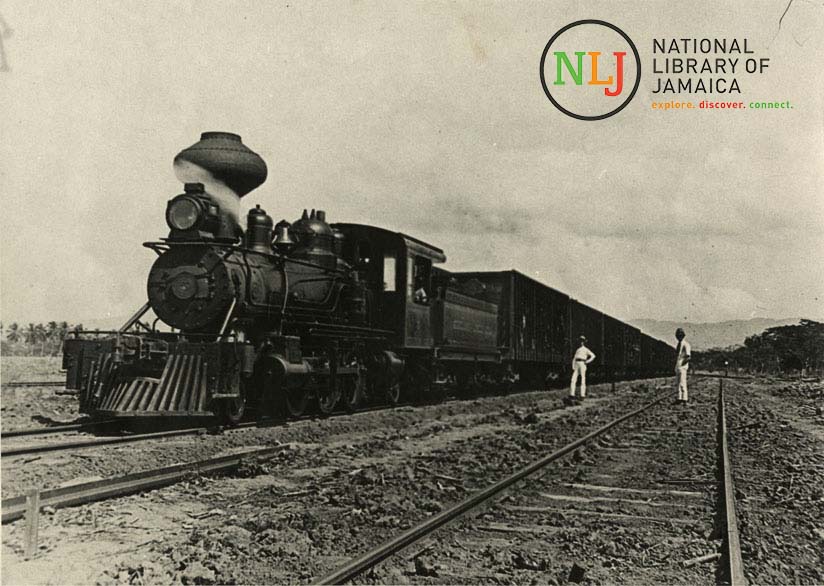
Under his governorship, several measures were carried out such as the regulation of Coolie immigration, the reform of legal procedure and state law, and establishment of electric telegraphs. He also encouraged the government to purchase and extend the railway for the Jamaica Railway Company at a cost of 93,932 pounds. The re-organization of the public gardens, re-modeling of educational institutions and consolidation of the public debt may also be attributed to Sir Anthony Musgrave.
Sir Anthony was next assigned to Queensland, Australia where his health began to deteriorate. In 1887, he was able to pay in short visit to Jamaica. However, he died a year later on October 9, 1888. Following his death, the board of governors of the Institute of Jamaica proposed a memorial in his honour. It was decided to acquired a portrait of Sir Anthony and to create a medal, which would be awarded for achievements in the fields of Literature, Science and Art or effective service in their promotion.
Back to top
|
.jpg) |
Rex Nettleford OM, OCC (1933-2010)
Professor the Honourable Ralston Milton Nettleford, better known as Rex Nettleford, was a national patriot, cultural ambassador, international scholar, dancer, choreographer, orator and Vice-Chancellor Emeritus of the University of the West Indies.
Nettleford was born February 3, 1933 in Bunkers Hill, Trelawny. He was the third of four children of a family of humble circumstances. He attended infant school in Falmouth, the Unity Government School and the Montego Bay Boys’ School. Upon leaving the Montego Bay Boys’ School, he won a scholarship to attend Cornwall College. Signs of Nettleford’s talent for choreography and dance were evident during his time at Cornwall, having choreographed and participated in several school dance routines. After graduating and teaching at Cornwall College for a while he won another open scholarship in 1953 to attend the University College of the West Indies in Kingston where he read for a degree in History.
Professor Nettleford earned his B.A. (Hons.) degree in 1956 and in a matter of three days he joined the University College of the West Indies staff as acting Resident Tutor in Trinidad. In that same year, he won the Issa Scholarship but did not take it up. Instead, he accepted the Rhodes Scholarship in 1957 to read for post graduate work in politics at Oxford University. Nettleford was the first West Indian to take this very prestigious degree which was specifically designed to train teachers.
During his stay in Oxford at Oriel College, he was active in the Oxford University Drama Society, choreographing for the Society’s many productions. He was also president of the Ballet Club and encouraged an interest in Afro-Caribbean dance.
On his return to Jamaica in 1959, he rejoined the staff of the University College of the West Indies and was immediately recruited by his mentor and founding father of the College, Sir Phillip Sherlock, to become Director of the College’s Extra-Mural Department (later the School of Continuing Studies). He was also made Resident Tutor for Jamaica and Staff Tutor in Political Education serving all territories that support the University College of the West Indies. Nettleford played an integral role in the expansion of the Extra Mural Department, and became an advocate of Higher Education, which prompted him to establish the Trade Union Education Institute in 1964.
As Director of Studies at the Trade Union Education Institute at the University College, he strived to improve the lives of Jamaica’s underprivileged, through the Institute’s objective, which allowed unionised, factory, and farm workers to unite with scholars to help bridge the education gap between the classes. During his time at the University of the West Indies he was elevated to top position in the University’s hierarchy: Deputy Vice Chancellor, 1986-98, then he was made Vice Chancellor, a position he kept until his retirement in 2004. He continued to serve the University as Vice Chancellor Emeritus, Professor of Cultural Studies.
As an intellectual, Professor Nettleford made distinctive contributions to Caribbean thought. Alongside noted Caribbean scholars, M.G. Smith and Roy Augier, he undertook a study of the Rastafari movement. This study, published in 1961, was later credited with helping to give credibility to a social group which hitherto had been construed as social outcasts. His contribution to academic literature is copious and encompasses books, journal articles, reports and various papers, some of which are listed below:
- Caribbean Cultural Identity, the Case of Jamaica: an Essay in Cultural Dynamics. Kingston: Institute of Jamaica, 1978.
- Cultural Action and Social Change, the Case of Jamaica: an Essay in Caribbean Cultural Identity. Ottawa, Ontario: International Development Research Centre, 1979.
- Trade Unionism Impact on Jamaica. Kingston (13 Waterloo Rd, Kgn. 10): Joint Trade Unions Research Development Centre, 1984.
- The University of the West Indies: a Caribbean Response to the Challenge of Change. London, MacMillan Caribbean, 1990.
- Tribute to Edna Manley. [Kingston (Mona, Kgn. 7): Rex Nettleford], 1987.
- Manley and the Politics of Jamaica: Towards an Analysis of Political Change in Jamaica 1938-1968. [Kingston (Mona, Kgn. 7)]: Institute of Social and Economic Research, 1971.
- Identity, Race and Protest in Jamaica. New York: William Morrow Company, 1972.
- Mirror, Mirror: Identity, Race and Protest in Jamaica. Kingston: Collins and Sangster, 1970.
- Dance Jamaica: Cultural Definition an Artistic Discovery: the National Dance Theatre Company of Jamaica 1962-1983. New York: Grove Press, 1985.
- National Identity and Attitudes to Race in Jamaica. Kingston: Bolivar Bookshop, 1966.
- Inward Stretch, Outward Reach: a Voice from the Caribbean. London: Macmillan Caribbean, 1993.
- Roots and Rhythms: Jamaica's National Dance Theatre. London: Andre Deutsch, 1969.
- “Caribbean Studies and the Creative Process: Towards Cultural Definition and Intellectual Discovery.” Caribbean Studies Newsletter 12.2 (Summer 1985).
- “Aggression, Violence and Force: Containment and Eruption in the Jamaican History of Protest.” Violence and Aggression in the History of Ideas. New Jersey: Rutgers University Press, 1974. 133-157.
Throughout Professor Nettleford’s career, dancing remained pivotal in his life. In 1963, he became the Co-founder, Artistic Director, Choreographer and Lead Dancer for the National Dance Theatre Company of Jamaica (NDTC). The NDTC is an ensemble which focuses on fusing together traditional Jamaican music, dance and rituals within the European balletic framework. NDTC remained as one of Nettleford’s many creative outlets and was used as a tool to portray traditional religions such as Kumina and Pocomania as creative artistic expressions, and not jus aspects of our religious history. Under his direction, the NDTC flourished and is today one of Jamaica’s most recognized and outstanding dance groups with a renowned repertoire. His belief that the Arts fostered self awareness and cultural identity was not limited to NDTC, as he was involved in a number of cultural enterprise and organisations. These include: Chairman of the Institute of Jamaica (1972-80); Cultural Consultant to UNESCO; Chairman, Task Force on Culture for Five-Year Development Plan (1978-82); and Member of the Jamaica Festival Commission.
For his contribution to academia and cultural identity, Nettleford has received several honours and awards such as:
- Order of Merit (1975) – Jamaican GovernmentThe Gold Musgrave Medal (1981)- The Institute of Jamaica
- Living Legend Award (1989) The Black Arts Festival in Atlanta
- Order of Caribbean Community (2008) – CARICOM
- Chancellor’s Medal of the University of the West Indies, 2009
- Honorary Doctor of Literature : Grande Valley State, USA (2000); University of Sheffield, UK (2001); University of Toronto, Canada (2001)
Nettleford died in a United States Hospital on February 1, 2010, a day before his 77th birthday.
Sources
Fairweather, Jane. “Rex”. Swing Magazine 1973.
Jamaica Mahogany Tributes to Rex Nettleford. Ed. Cecile Clayton. UWI:Mona, 2011.
“Saluting a Living Legend.” Sunday Gleaner, 6 Feb. 2005. 21-26.
Thirty Five Years of the NDTC. 35th Ed. City of Kingston Credit Union, 1997.
Back to top
|
|
|